
Hello, Friends! Please read the “About” page for an orientation!
Here’s our first online Bible study passage. Please read it and add your comments, observations, and insights for the group to see and discuss here and in our conference call.
The chapter appears below in the King James Version (which is in the public domain), for reasons of copyright compliance. Click on the “Alternate Versions” link to find other versions on BibleGateway.com.
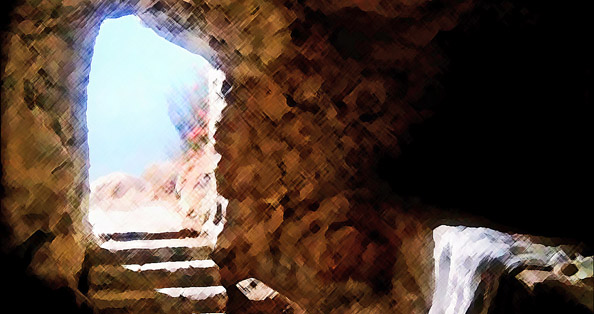
An Empty Tomb
Acts 1 (KJV)
Acts 1:1-26 KJV Alternate Versions
1 The former treatise have I made, O Theophilus, of all that Jesus began both to do and teach,
2 Until the day in which he was taken up, after that he through the Holy Ghost had given commandments unto the apostles whom he had chosen:
3 To whom also he shewed himself alive after his passion by many infallible proofs, being seen of them forty days, and speaking of the things pertaining to the kingdom of God:
4 And, being assembled together with them, commanded them that they should not depart from Jerusalem, but wait for the promise of the Father, which, saith he, ye have heard of me.
5 For John truly baptized with water; but ye shall be baptized with the Holy Ghost not many days hence.
6 When they therefore were come together, they asked of him, saying, Lord, wilt thou at this time restore again the kingdom to Israel?
7 And he said unto them, It is not for you to know the times or the seasons, which the Father hath put in his own power.
8 But ye shall receive power, after that the Holy Ghost is come upon you: and ye shall be witnesses unto me both in Jerusalem, and in all Judaea, and in Samaria, and unto the uttermost part of the earth.
9 And when he had spoken these things, while they beheld, he was taken up; and a cloud received him out of their sight.
10 And while they looked stedfastly toward heaven as he went up, behold, two men stood by them in white apparel;
11 Which also said, Ye men of Galilee, why stand ye gazing up into heaven? this same Jesus, which is taken up from you into heaven, shall so come in like manner as ye have seen him go into heaven.
12 Then returned they unto Jerusalem from the mount called Olivet, which is from Jerusalem a sabbath day’s journey.
13 And when they were come in, they went up into an upper room, where abode both Peter, and James, and John, and Andrew, Philip, and Thomas, Bartholomew, and Matthew, James the son of Alphaeus, and Simon Zelotes, and Judas the brother of James.
14 These all continued with one accord in prayer and supplication, with the women, and Mary the mother of Jesus, and with his brethren.
15 And in those days Peter stood up in the midst of the disciples, and said, (the number of names together were about an hundred and twenty,)
16 Men and brethren, this scripture must needs have been fulfilled, which the Holy Ghost by the mouth of David spake before concerning Judas, which was guide to them that took Jesus.
17 For he was numbered with us, and had obtained part of this ministry.
18 Now this man purchased a field with the reward of iniquity; and falling headlong, he burst asunder in the midst, and all his bowels gushed out.
19 And it was known unto all the dwellers at Jerusalem; insomuch as that field is called in their proper tongue, Aceldama, that is to say, The field of blood.
20 For it is written in the book of Psalms, Let his habitation be desolate, and let no man dwell therein: and his bishoprick let another take.
21 Wherefore of these men which have companied with us all the time that the Lord Jesus went in and out among us,
22 Beginning from the baptism of John, unto that same day that he was taken up from us, must one be ordained to be a witness with us of his resurrection.
23 And they appointed two, Joseph called Barsabas, who was surnamed Justus, and Matthias.
24 And they prayed, and said, Thou, Lord, which knowest the hearts of all men, shew whether of these two thou hast chosen,
25 That he may take part of this ministry and apostleship, from which Judas by transgression fell, that he might go to his own place.
26 And they gave forth their lots; and the lot fell upon Matthias; and he was numbered with the eleven apostles.
 His Word–with Friends
Here are notes from our Bible study in this passage on Tuesday, December 1, 2015 via conference call. Each new paragraph represents the comments of a new person. Seven of us were present for the call.
Acts 1:1-11
This is Luke’s second Book.
Jesus’ disciples were hoping for one thing (“Will you at this time restore the kingdom to Israel?”), but God was planning something else. They wanted their land out of Rome’s hands. But He said, “It’s not for you to know the times and seasons the Father has set… But you will receive power when the Holy Spirit has come on you. And you will be my witnesses…to the ends of the earth.”
Jesus will restore a kingdom to Israel—but not until He returns to rule as King from Jerusalem. The disciples did not understand God’s intention to take the good news of redemption to the entire world—Jews and gentiles. Sometimes, our understanding of God’s will is correct in some point—but leaves out major aspects of His plans before it is accomplished.
A few conferences recently have focused on the lamentable but real fact that what people see and notice is strongly conditioned by what they are looking for. You’re on the alert for what you’re looking for—but an elephant can stroll by unnoticed if it’s not what you were looking for. There’s a powerful perceptual bias in the observer.
“…to Judea, Samaria…. Jesus laid out the redemption of both Jews and gentiles in its entirety. Fast forward several chapters, and the saints in Jerusalem were finally rejoicing that “So, God has granted eternal life to the gentiles too!” But when Jesus earlier had said “Samaria and the uttermost parts of the earth,” He clearly had meant gentiles. A few years later, they still hadn’t gotten it. We need to ask God for mercy for ourselves, as we too tend to expect certain things, and need deliverance from self-imposed tunnel vision—so that we don’t miss what He’s trying to show us while we’re busy expecting what our own conditioned imaginations prompt us to.
This expectation of what is going to happen is what the magician—the prestidigitator—takes advantage of. Its exploitation is his living. The skill of an illusionist allows him to pull off the most outrageous things in front of your eyes. You’re expecting something else—not only because of your own experience and expectations, but also because of what he’s doing. You’re conditioned not to expect what he’s doing before your eyes, in full view. Illusionists have a rhythm to their patter. They have a rhythm and sequence to what they do with their hands and with props—and with light, smoke, and mirrors. They pull off their tricks right in front of your eyes because you’re following and expecting something else. You’re fooled! One can miss what’s going on, even as it’s going on—simply by having ordinary expectations. And when those expectations are ideological or zealously embraced, one is even more a potential victim of deception—or blindness to what’s going on.
Jesus didn’t correct his disciples. While what they expected (a restored kingdom) was sort of true, what they were looking for was really never going to happen. Jesus didn’t take the opportunity to stop and lecture them about why they were off base. Instead, He gave them instructions which, if obeyed, would necessarily lead to enlightenment in due time. “Farther along, we’ll know all about it,” goes the song. Sometimes the way to understanding is simply faithful obedience. God doesn’t always give us a lecture, but asks us to obey Him. That will lead us to shake off preconceived notions. Some fail that crisis: “You can’t really be serious about what you’re asking me to do; that would violate my preconceived notions!” We cling to those notions, but if we’re simple enough to simply walk with the Lord, He will lead us into clarity through circumstances, and out of our calcified perspectives. That requires simplicity and willingness to be stretched and flexible. This also applies to cherished ideals or doctrines that may be partially right but are distorted through over-emphasis or our pushing them before (or after) their time. One has to hold things lightly. “And if anyone thinks that he knows anything, he knows nothing yet as he ought to know.” 1 Corinthians 8:2. We don’t want to let precious things go, but we want to be flexible, and need the Lord to give us balance and accuracy. The light we need often comes through faithful walking with Him, rather than through intellectual exercise.
Back to the Magician: He works on human tendencies—so people miss things spectacularly. In God’s case, He’s not trying to hide things from those who love him. He’s no magician. Where’s the problem? It’s Pogo: “We have met the enemy, and he is us.” What is it about our souls that is out of kilter, out of step with God?
Sometimes we have a shrunken vision of what God is doing. It’s so much larger! We know only a part of it. Obedience is the key. Keep on plugging, learning, and praying, and understanding accumulates. Keep on obeying, keep on pressing in, keep walking with Him. That brings humility. The disciples were hoping for simple restoration of Israel to a previous state. The ultimate restoration of Israel is New Jerusalem (Revelation 21 & 22)—infinitely beyond our easy comprehension. “…Him who is able to do exceedingly abundantly above all that we ask or think…” Ephesians 3:20.
Acts 1:3: Q: What is the kingdom of God? For many, it seems to mean only people who have died, and now live with God. Jesus said, “The coming of the kingdom of God is not something that can be observed, nor will people say, ‘Here it is,’ or ‘There it is,’ because the kingdom of God is in your midst.” Luke 17:20. In practical, present terms, the kingdom of God is the earthly body of Christ. The promise to Jesus’ disciples of the Holy Spirit is important not only to taking the preached Gospel to Judea, Samaria, and the ends of the earth—but in all He does, every day and everywhere, to assemble the bride of Christ, His living Body.
The Kingdom of God is, first, wherever God is, in fact, king. On the flip side of “exceeding abundantly” is that what God is doing often is also so much “smaller” than we are expecting. What’s the next and nearest thing for me to do? People look to grand, long-standing institutions—churches, cathedrals, historical movements, great figures, and so on. Here, the disciples looked for restoration of self-rule to Israel—something big and powerful. But what the Lord asked them to do was wait—cool your heels—until I (the Lord) do something. God would send His Spirit and change so much. The Lord didn’t explain much. The disciples didn’t know the particulars of what they were waiting for. And they forgot a lot of what He had told them plainly. How would they understand being filled with the Holy Spirit until they experienced it? So they gathered and stayed together. They didn’t fly apart, but stuck together.
We’re told that the current world lies in the lap of evil one (1 John 5:19). When Jesus came, He brought the kingdom of God. They asked, “Will you restore the kingdom.” But He said, “Wait until you’re clothed upon with power… and you will be builders of that kingdom.
“He has rescued us from the dominion of darkness and brought us into the kingdom of the Son he loves…” Colossians 1:13.
We tend to build castles on some words. “King” in Greek is a big deal. In Hebrew or Latin, all “King” means is simply “ruler”—the one who gives orders. The Kingdom of God is where God is giving orders, and where those orders are being followed. It’s really concrete. Where is he being served and obeyed, and where not? Where are people doing it together? All it means is, “Who’s in charge here?”
“Orders.” That’s an interesting word. It suggests, of course, orderliness. A ruler or leader puts people in order and holds in his heart and mind a vision, an order, a picture of how things should be done, and what should happen. The Queen of Sheba, seeing Solomon’s kingdom, marveled at how his servants were clothed, and how his administration was arrayed. That impressed her! A king is expected to shoulder conceptualizing, ordering, timing, and actuating his people do what he has in mind.
“You will be my witnesses…” (Acts 1:8) This is frequently read together with Matthew 28. The essence many gather from these passages, taken together, is: preach the Gospel everywhere, end of story! But that’s only step one. “Be my witnesses…” holds more than that. Paul is a sterling example in how he conducts himself and in the careful instruction he provides, modeling what needs to be provided after a person comes to faith. In telling them to wait for the Holy Spirit to come upon them, Jesus gave His disciples just the first steps—not the whole plan, but starting orders. As they begin, other aspects become clear as the picture gets larger and larger. “Go therefore and make disciples of all the nations…” Matthew 28:19.
I Kings 10:4 “And when the queen of Sheba had seen all the wisdom of Solomon, the house that he had built, the food on his table, the seating of his servants, the service of his waiters and their apparel, his cupbearers, and his entryway by which he went up to the house of the LORD, there was no more spirit in her.” The queen was blown away. She said, “Indeed the half was not told me. Your wisdom and prosperity exceed the fame of which I heard.” We are charged to make disciples (the word means learner, pupil) in addition to preaching the Gospel. Solomon had numerous aspects under good control. By contrast, his son Rehoboam was recklessly foolish in taking advice. The bravado his young companions urged on him backfired hard. Rehoboam failed to make the transition critical to his situation, and barely escaped with his life. Jesus’ disciples were making a critical transition. God had a different transition in mind than they did. Making good transitions would make a great Bible study sometime—it would have to include Joshua and the promised land… They asked, “are you going to restore the kingdom now?” Jesus said, “No, you’re going to make a historic transition…” In essence, He said, “This is not about me, but about you, and what you will do going forward. The Holy Spirit who is going to come upon you, He’ll teach you and lead you ahead. I’m going away.” It’s all encouragement that God has given us the way to proceed successfully through the transition ahead of us.
Solomon and the Queen represent a small foretaste of Jesus’ reign and the glory and riches of the nations that will be brought into New Jerusalem. It’s a marvel that he uses people like us to build his kingdom.
The queen’s set of descriptions of Solomon’s kingdom forms a good list of what the house of God should provide today: “the meat of his table, the sitting of his servants, the attendance of his ministers,” their apparel (“garments of praise,” “clothed with compassion, kindness, humility…”) This is clothing oneself with the “fruits” of the Spirit. Jesus’ kingdom pays astounding attention to these. His table groans with good things. The arraying of his servants is astounding, when they are arrayed as He has instructed. This, in the house of God is, itself, witness of Christ to Judea, Samaria, and the ends of earth. Jews and gentiles alike find witness there—in how we ought to be arrayed and how we ought to provide for one another by the Spirit. That should take the spirit out of a visiting queen!
Acts 1:2. The words of Christ are printed in red in some Bibles. That tends to imply that the words He spoke in person are of a different character than the other words in the scriptures, likewise inspired by the Holy Spirit. That’s not so. There is more packed into the promise of the Holy Spirit than what appears here, in Acts 1. There is more packed into the promise of the Spirit than explicitly stated in these words: “You will receive power.” Power is a generic word. Some take it to mean simply the power to preach and spread the Gospel, end of story. The Lord told His disciples all they needed to know just then. They didn’t and couldn’t know all that this gift would mean. And it would mean a lot more than simply being empowered to preach. All of the gifts of the Spirit, imparting a capacity for knowledge, understanding, and much more, are all bound up in this promise. But all He told them was, “You shall receive power…” Those few words couldn’t and didn’t contain all He meant.
Acts 1:2. Luke testifies that Jesus did what he did as a man through the Holy Spirit. If he did what He did through the Spirit, how much more do we need to be filled with the Spirit? This promise is an invitation to become co-workers with Him, and members of His body. Sometimes people treat the Holy Spirit as peripheral, but He is the Facilitator of all this.
Q: New Jerusalem is eventual; but we live now. How do we advance the kingdom of God on earth now? If the disciples’ vision in terms of a restored current kingdom was too small, what is the magnitude of what we ought to be reaching for now?
The kingdom Jesus began to describe to His disciples finally would include lots of converted Romans, and people from everywhere on earth.
A: The body of Christ—Christian congregations as living bodies of many members—is New Jerusalem in the building. That body is a portrait of God’s house operating today; it will ultimately fulfill the whole, eventual picture. Here and now, we have a house where God lives with His people. Finally, it will be the vast city where He lives with His people. It’s the same thing, in its successive snapshots. This is the house that grows up to be a city!
Fields see sowing time, growing time, harvest time. There are beginnings, middles, and fulfillments in life and in the story of God’s plan. From embryo to infant, to toddler, to child, to adult… It’s the same DNA, in development towards what it ultimately will be. New Jerusalem is under construction now—but it is New Jerusalem. God sees this in our current stage, and asks us to keep going to see its fulfillment. If we go on with Him, and “Seek first the kingdom of God, and His righteousness…” Matthew 6:33, we are taking our part on that trajectory.
God took us, not as if we were sound building stones, but bundles of deficits. He saw what we should become, from before the beginning. He’s building a house not of stones, but of us.
God is the ultimate house builder—and homemaker. When His home and ours are one and the same, then Jesus will see fulfillment of His prayer to the Father: “They may be one, as we are one.” John 17:22.
LikeLike